
LAKE SHORE CRAFTS BY LISA.
Supporting a handmade children’s clothing and embroidery business through Shopify storefront improvements, seasonal merchandising, product personalization and ongoing digital support.
Improving the digital storefront around the business behind it.
First, understand the business behind the store.
Lake Shore Crafts by Lisa is a handmade children’s clothing and embroidery business operating through Shopify. Its storefront has to do more than display products. It needs to present seasonal collections clearly, support personalized orders and remain practical as the business changes what it wants customers to notice.
A handmade business with changing storefront priorities.
The products, collections and seasonal priorities of the business can change throughout the year. That means the storefront cannot remain static. What deserves attention during one period may need to move aside when another collection becomes commercially important.
The work needed to improve the store without disconnecting it from how Lisa actually runs the business.
Rather than treating the project as a one-time visual redesign, our work developed around practical needs inside the existing Shopify store: improving presentation, adapting the homepage, supporting personalized products, making important collections easier to discover and continuing to adjust the storefront as priorities changed.
What needed attention.
Before changing individual sections, we looked at the practical jobs the storefront needed to perform for the business and its customers.
Storefront presentation
The homepage needed a clearer visual direction and stronger presentation of the business, products and collections rather than functioning only as a place where products happened to be listed.
Changing seasonal priorities
The products that mattered most to the business changed with the season. The storefront therefore needed to be flexible enough to bring priority collections forward without removing access to the rest of the catalogue.
Personalized ordering
Some products require information from the customer, such as a name for embroidery. The shopping experience needed a practical way for customers to provide that information while ordering.
Customer journey
Presentation, collection visibility and product options all affect how easily a visitor understands what is available and how confidently they can move toward placing an order.
Ongoing adaptability
The business needed support that could respond to new products, seasonal changes and storefront requirements rather than treating the site as something that would never change after launch.
Don’t just take our word for it. Explore the storefront.

A captured version of the store before the later homepage, presentation and merchandising improvements shown alongside it. Scroll through the viewer above to inspect the complete capture.
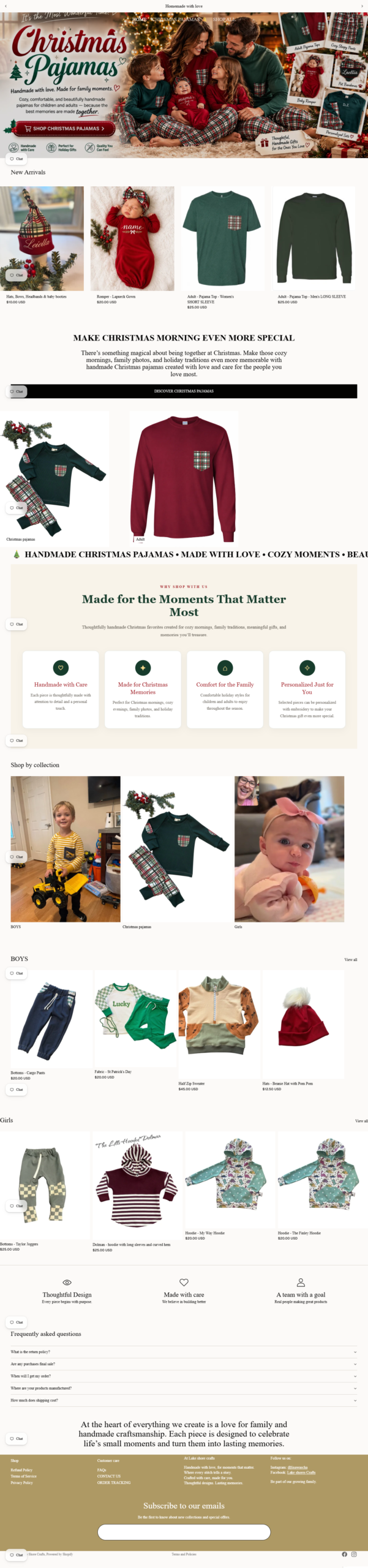
The later storefront reflects continued work around homepage presentation, merchandising, collection visibility and the customer-facing shopping experience. Scroll through the full capture to inspect the storefront in more detail.
The screenshots matter more when you know what changed.
The work was not about changing the storefront simply so it would look different. Each improvement was connected to presentation, merchandising, usability or a practical requirement from the business.
Clearer homepage direction
The homepage was developed to give the business a stronger opening presentation and create clearer paths into the products and collections customers were being encouraged to explore.
Stronger product focus
Priority merchandise could be brought forward instead of allowing every collection to compete equally for attention on the storefront.
Better merchandising flexibility
The storefront could be adjusted as Lisa’s priorities changed, including giving seasonal products greater prominence while keeping other parts of the catalogue accessible.
A store built around real use
The work extended beyond appearance into product ordering, personalization and ongoing adjustments inside the Shopify environment.
What Meskpad actually worked on.
A case study should show more than a finished screenshot. These are some of the practical areas addressed as the Lake Shore Crafts storefront evolved.
Homepage & storefront presentation
SHOPIFY STOREFRONTWe worked on the customer-facing homepage so the storefront could present the business and its products more deliberately. The goal was not simply to add visual elements, but to create a clearer opening experience and give important merchandise stronger placement.
Homepage sections were developed and refined around the store’s needs, including hero presentation, featured products and collections, supporting content and other storefront sections.
Seasonal merchandising
CHRISTMAS PAJAMASWhen Christmas pajamas became the business’s primary seasonal focus, the storefront needed to reflect that change. We adjusted the homepage direction so the Christmas pajama collection could receive stronger visibility while other collections remained available to customers.
This is an important distinction in e-commerce work: the store does not exist only to look consistent. Its presentation also needs to respond to what the business is currently trying to sell.
Product personalization
SHOPIFY PRODUCT EXPERIENCEPersonalized products create a different checkout requirement from standard products. Customers need a way to communicate the information required to prepare their order.
Custom name-entry fields were implemented on applicable products using Shopify line-item properties. This allows personalization information entered on the product page to be associated with the customer’s order rather than relying on a disconnected follow-up process.
Collection & product visibility
MERCHANDISINGAs products and priorities changed, we worked with the way collections were surfaced across the storefront. The purpose was to make it easier for customers to reach products that were currently important without unnecessarily hiding the broader range.
This allowed the storefront to work more like an active sales environment and less like a fixed catalogue that remained unchanged regardless of the season.
Responsive storefront support
CUSTOMER EXPERIENCEStorefront changes also needed to remain usable across screen sizes. Homepage assets and presentation were considered for both desktop and mobile experiences so important content could remain clear when customers visited from different devices.
For an e-commerce store, responsive work is part of the shopping experience rather than an optional visual adjustment.
Ongoing Shopify support
CONTINUED IMPROVEMENTThe engagement did not stop with a single homepage update. As new requirements appeared, the store continued to receive practical support around presentation, products and customer-facing functionality.
That ongoing approach allowed improvements to follow the business instead of forcing the business to work around a storefront that could no longer adapt to what Lisa needed.
CUSTOM NAME
ENTRY SUPPORT
Some improvements happen behind the design.
One practical requirement was making personalized products easier to order. Instead of treating personalization as an afterthought, customer name information could be collected directly through the relevant Shopify product experience.
Beyond design: improving how the store works.
Store optimization is not one isolated task. It means identifying friction or changing business requirements and improving the parts of the shopping experience affected by them.
Presentation
Refining how the business, products and collections are presented so the storefront communicates more clearly.
Merchandising
Adjusting what receives priority as seasonal campaigns and commercial focus change.
Product experience
Supporting product-specific requirements such as customer personalization information.
Customer journey
Making it easier for visitors to understand the store, find relevant products and move through the shopping experience.
Responsive experience
Considering how storefront presentation and important content behave across desktop and mobile screens.
Continued refinement
Updating the store as products, priorities and practical business requirements evolve.
The storefront changes because the business changes.
Lake Shore Crafts demonstrates why e-commerce work often continues after the first visible improvement. New priorities create new storefront requirements.
Improve presentation
Strengthen the customer-facing storefront and establish a clearer presentation of the business and products.
Adapt to product needs
Implement practical functionality when personalized products require additional information from customers.
Respond to the season
Shift homepage and merchandising emphasis when Christmas pajamas become the priority without eliminating the rest of the catalogue.
Continue refining
Provide ongoing support as new storefront requirements and business priorities appear.
What this project demonstrates.
Rather than attaching unsupported performance numbers to the project, these are the capabilities directly demonstrated by the work carried out on the store.
Shopify experience
Practical work inside an active Shopify storefront and its customer-facing experience.
Business-led decisions
Storefront priorities adjusted around what the business actually needed at different points.
Practical execution
Implementation extending beyond visual design into product functionality and merchandising.
Continued support
A working relationship capable of responding as the store’s requirements change.
No invented numbers. Just documented work.
This case study focuses on work that can be described and supported from the Lake Shore Crafts engagement. Where verified revenue, conversion or other performance measurements are not available, we do not manufacture them. The storefront captures and documented implementation provide the evidence presented here.
Your store may not need rebuilding. It may need the right improvements.
Tell us what’s currently limiting your Shopify store and we’ll start with the problem rather than forcing a predetermined solution.